

Automation, Low-Code & No-Code Delivery
From workflow automation, internal dashboards, or rapid MVP builds, we deliver dedicated remote teams that help you implement automation and low-code solutions end-to-end.
End-to-End Automation and Rapid Tool Delivery
Our teams help you automate execution, launch internal tools, and accelerate business workflows.
Business Process Automation
Reduce repetitive work and improve operational consistency.
- Automation of approvals, handoffs, reporting
- Cross-team workflow orchestration
- Faster execution with fewer manual errors
RPA & Workflow Orchestration
Deploy bots and automation pipelines for high-volume tasks.
- Robotic Process Automation for repetitive workflows
- Rule-based execution across systems
- Monitoring and continuous optimization
Low-Code / No-Code MVP Development
Build internal tools quickly without long development cycles.
- Dashboards, admin tools, operational apps
- Rapid MVP builds for business teams
- Faster iteration and deployment
AI-Assisted Automation Pipelines
Combine automation with intelligence for next-gen workflows.
- Smart document processing
- AI-enabled workflow routing
- LLM-powered operational assistants
Integration & API Automation
Connect systems through automated API-driven workflows.
- API integrations between internal tools and SaaS platforms
- Automated data syncing across systems
- Event-driven workflows and trigger-based actions
Internal Tools & Operational Dashboards
Build tools to manage and monitor operations
- Operational dashboards for workflow visibility
- Admin tools for managing automated processes
- Workflow monitoring and manual override controls
What You Can Expect
Engineering Ownership — Not Resource Allocation
Architecture-First Thinking
Predictable Sprint Execution
Retention & Continuity Managed
Built for Security & Scale
Remote Delivery Model
Our Remote Delivery Model
Outcome-focused execution. You define requirements, we deliver results.

Our Delivery Process
How We Structure and Scale Your Execution
Architecture review, stack alignment, risk assessment, and roadmap evaluation.
Sprint planning, backlog definition, technical standards, governance model setup.
Team onboarding, environment integration, workflow alignment.
Sprint execution, CI/CD releases, monitoring, performance tuning.
Own the Outcome. Skip the Complexity.
Intellibeans combines dedicated teams, structured processes, and performance accountability — so your business scales with confidence.
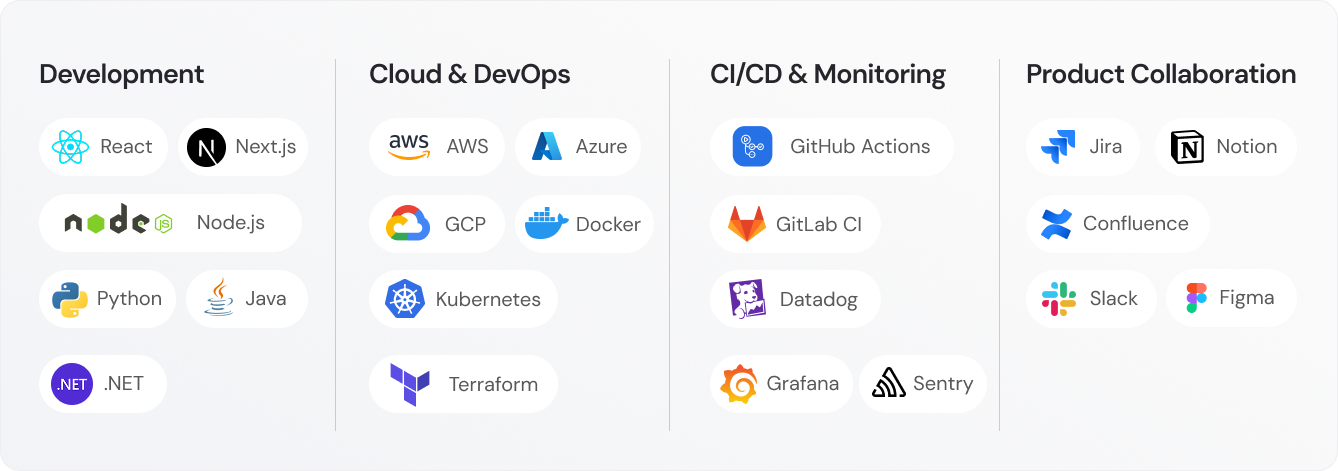
Tools We Use
Built With Proven, Modern Tools
Testimonial
Reviews From Our Clients
Real feedback from teams who trust us to deliver, scale, and support their products end to end.
Industries We Serve
Industry Expertise That Drives Results

Financial Services
Dedicated teams supporting financial institutions and fintech companies across software development, reporting operations, compliance workflows, reconciliation processes, automation, and secure data management.

Telecommunications
Execution teams supporting telecom providers with service workflows, compliance documentation, operational reporting systems, backend coordination, and customer support infrastructure.

Information Technology
Dedicated engineering and operations teams supporting IT companies with software development, cloud infrastructure, DevOps, cybersecurity support, analytics, and backend technical execution.

Retail and eCommerce
Scalable remote teams supporting ecommerce brands with platform development, order workflows, customer operations, marketing execution, automation systems, and performance analytics.

Healthcare
Compliance-aware execution teams supporting healthcare providers with administrative workflows, documentation management, reporting systems, insurance coordination, and secure backend operations.

Insurance
Execution teams supporting insurance providers with claims workflows, policy processing, compliance documentation, reporting systems, automation, and high-volume backend operations.
Technologies We Leverage
We deliver automation using modern execution frameworks: